The humanoid robot industry is currently undergoing rapid development. As a core carrier integrating artificial intelligence and advanced manufacturing, humanoid robots are expanding their application boundaries across industrial production, commercial services, special operations and other diverse scenarios. With continuous technological iterations in the industry, lightweight design, high load capacity, long battery life, maintenance-free operation and low noise have become core indicators for evaluating the comprehensive performance of humanoid robots. The performance of core components in joint transmission and limb motion systems directly determines the robot’s motion accuracy, cruising duration and service life. Targeting the core technical pain points of humanoid robot components, CSB Plastic Bearings leverages its years of R&D experience in high-performance wear-resistant composite materials to launch a series of solutions including DURAPLAS® high-performance plastic bearings, CSB-BAL® plastic joint connecting rods and DURAFILM® polymer coatings. Meanwhile, a variety of mature in-house bearing products are adaptable to full-scenario robot applications, comprehensively solving industrial challenges such as friction loss, excessive weight, cumbersome maintenance and operating noise in robot moving parts, and providing solid component support for the technological upgrading and industrial implementation of domestic humanoid robots.
In recent years, R&D of humanoid robot technologies has focused on two major directions: structural optimization and performance improvement. Traditional humanoid robots generally adopt metal bearings and metal connecting rods as core transmission components. Although these can meet basic load requirements, they suffer from drawbacks such as heavy weight, high friction coefficient, mandatory regular lubrication, loud operating noise and high energy consumption. Excessively heavy components greatly increase the overall weight of robots, raise power consumption and directly shorten operating duration. Frequent friction loss of metal parts not only reduces motion accuracy but also requires regular inspection and oil maintenance, significantly increasing operational costs and making it difficult to adapt to all-weather, unmanned and high-precision operation requirements. At the same time, the industry’s demand for miniaturized and compact robot designs continues to grow. Precision structures such as fine hand manipulation, flexible ankle movement and micro screw transmission impose stricter requirements on the wear resistance, spatial adaptability and transmission efficiency of components. Against this technical backdrop, composite parts featuring lightweight properties, self-lubrication, high wear resistance and maintenance-free operation have become the mainstream trend for core humanoid robot components.
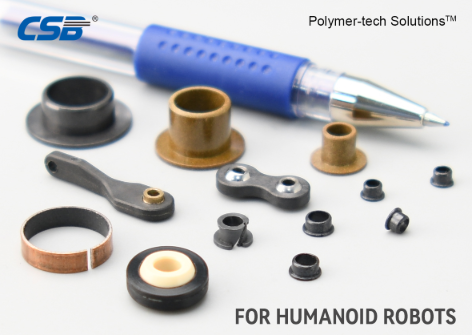
With in-depth expertise in polymer composite plastic bearings, CSB Plastic Bearings accurately responds to the iterative technological needs of humanoid robots and has developed a lineup of targeted core products. Among them,
DURAPLAS® high-performance composite plastic bearings serve as premium core components for humanoid robot limb motion systems. Developed with independently formulated high-performance composite materials, these bearings revolutionize the structure of traditional metal bearings. Weighing only 20% of equivalent metal bearings, their extreme lightweight advantage effectively reduces the load on high-frequency moving parts such as robot hand joints, ankle joints and fingers. This greatly cuts power consumption, facilitates energy saving, extends the effective cruising time of robots, and perfectly adapts to the long-duration operation requirements of humanoid robots.
DURAPLAS® plastic bearings also deliver outstanding performance in load capacity and service life. Featuring a maximum static load of 125MPa, they fully satisfy the load requirements of most mainstream humanoid robots, stably supporting high-intensity movements including grasping, walking and stretching without component deformation or jitter. Unlike ordinary bearings, these composite bearings incorporate reinforcing fibers and permanent internal lubricants, eliminating the need for manual oil supply and maintenance throughout the robot’s entire lifecycle. This fundamentally resolves the maintenance pain points of frequent lubrication and regular overhaul required by traditional metal bearings, greatly reducing post-operation maintenance costs. In addition, the specialized composite structure suppresses friction noise during operation, ensuring smooth and silent movement of robot joints and fingers, making them ideal for service and household robots with strict noise control standards.
To address the precision operation challenges of humanoid robot dexterous hands, CSB has launched
CSB-BAL® double spherical plain bearing as an alternative to traditional copper joint rods, realizing technological upgrading for fine motion components. Dexterous hands of humanoid robots need to complete high-precision delicate operations such as grasping, holding and assembling, which demand extreme load-bearing stability and flexibility from joint connecting rods. Manufactured with high-strength wear-resistant composite materials, CSB-BAL® plastic joint connecting rods enable the 2mm inner diameter micro jiont rods to withstand a load of up to 500N, delivering far higher load capacity than copper counterparts of the same size and balancing miniaturized dimensions with high structural strength. Adopting CSB’s core self-lubrication technology, the rods achieve permanent oil-free operation without jitter, wear or abnormal noise during long-term high-frequency reciprocating movement, ensuring accurate, smooth and stable fine movements and effectively improving the precision operation capability of humanoid robots.
Catering to the compact and miniaturized development trend of humanoid robots, CSB has developed DURAFILM® polymer coating technology, filling the technical gap in micro precision transmission components. Applicable to thin-walled bearings and micro lead screws in robot precision transmission systems, the specialized polymer coating endows parts with excellent self-lubrication and wear resistance, enabling efficient transmission without additional lubricants. On the one hand, it meets compact design requirements, saves structural space and facilitates overall lightweight and miniaturized upgrading of robots. On the other hand, it significantly improves the transmission efficiency of micro lead screws, reduces friction loss of precision components and extends the service life of precision transmission systems, providing an innovative solution for the high-precision and miniaturized R&D of humanoid robots.
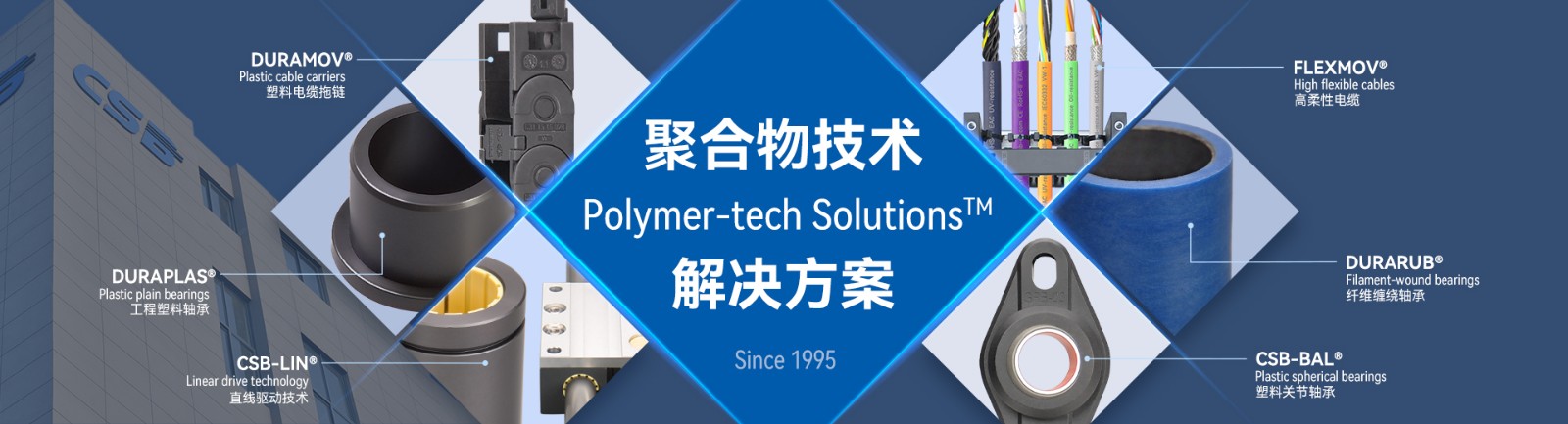
In addition to the above core products, a variety of mature CSB products widely adapt to full-scenario humanoid robot applications, further improving the robot component supporting system. The EPB3 engineered plastic bearings are suitable for all joints and rotating mechanisms of intelligent humanoid robots, stably operating within a wide temperature range of -40℃ to 130℃ to adapt to complex high and low temperature working conditions with permanent maintenance-free and silent performance. The EPB7 plastic sleeve bearings apply to clamping and rotating shafts of robotic arms, ensuring stability and durability during high-frequency arm operations. Furthermore, TEFPLAS® fluoroplastic bearings feature high temperature resistance, corrosion resistance and low friction, suitable for special humanoid robots operating in extreme working conditions. The CSB-LIN® linear guide system adopts DURAPLAS® wear-resistant materials, and its lightweight maintenance-free sliding structure applies to linear transmission parts of robot limbs to improve overall motion fluency. The PRB30 series plastic rolling bearings adopt modified PEEK materials and ceramic ball structures, operating stably at temperatures up to 150℃ with superior corrosion and wear resistance, ideal for high-intensity and complex working conditions of industrial humanoid robots. The full product portfolio covers general, precision and special application scenarios of humanoid robots.
Currently, the humanoid robot industry is in a critical stage of large-scale commercialization, and the localization, high performance and cost reduction of core components have become core breakthrough points for industrial development. As a benchmark enterprise in China’s high-performance plastic bearing industry, CSB Plastic Bearings continuously focuses on the technological upgrading needs of the robot industry, increases R&D investment in high-performance wear-resistant composite materials and self-lubricating transmission components, iterates and optimizes product performance, and improves the full-scenario component matching system for humanoid robots. Compared with traditional metal parts, CSB’s full range of composite bearings, connecting rods and coating solutions integrate lightweight properties, high load capacity, maintenance-free operation, low noise, long service life and cost advantages, perfectly aligning with the future technological development direction of humanoid robots.
In the future, CSB Plastic Bearings will further deepen its layout in the core component track of humanoid robots. Relying on independent material R&D and structural design advantages, the company will continuously tackle technical challenges in precision transmission, extreme working condition adaptation and ultra-lightweight optimization, and enrich its product matrix for robot applications. Meanwhile, CSB provides customers with all-round supporting services including customized R&D, model selection and technical commissioning, empowering high-quality, low-cost and large-scale industrial development of humanoid robots and accelerating the industrial upgrading of artificial intelligence and high-end intelligent manufacturing equipment.
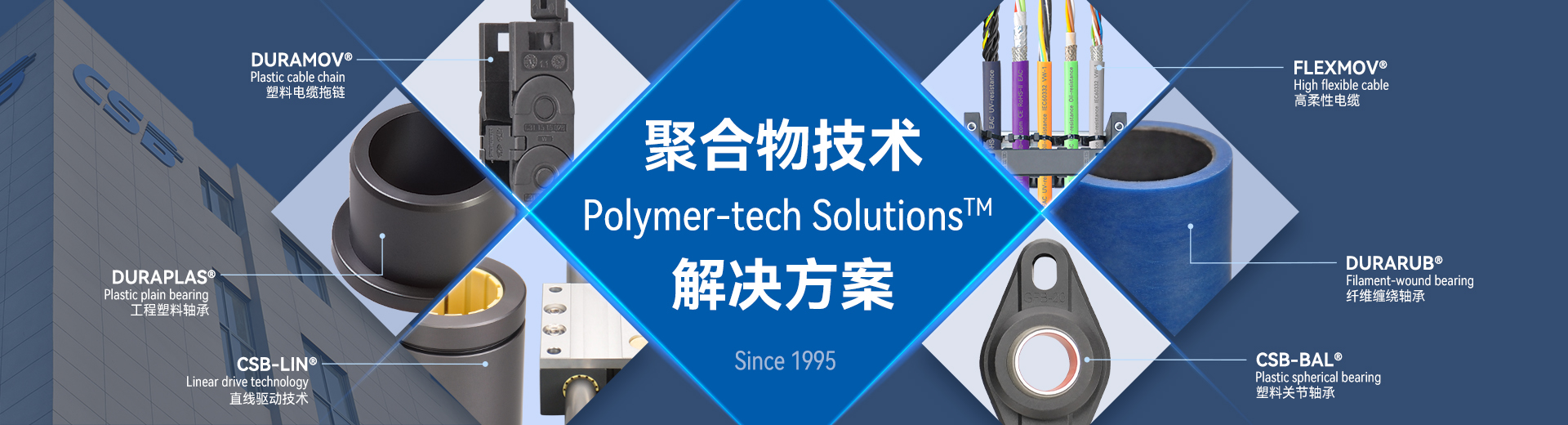
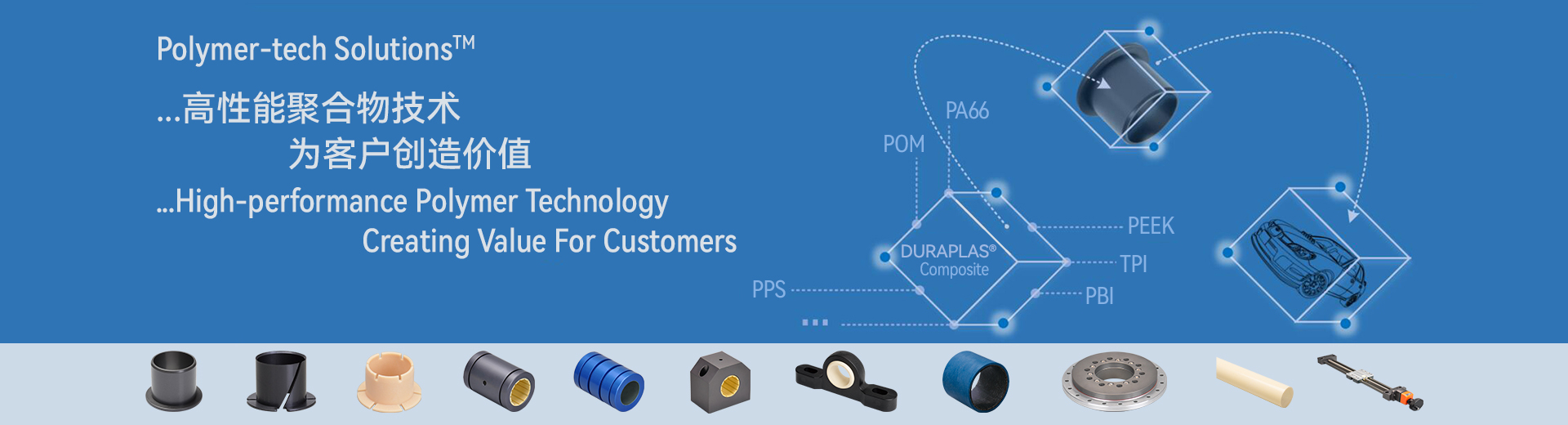
 Polymer-tech SolutionsTM